
In February, we celebrated the launch of the new Nyagakenke Village Primary School, built in partnership with That Gorilla Brand.…
Celebrating the legacy of Dian Fossey, 40 years on
On 26 December 1985, the world lost one of the most influential figures in wildlife conservation. Forty years on, the life and work of Dr Dian Fossey continue to shape how mountain gorillas are protected and understood today.
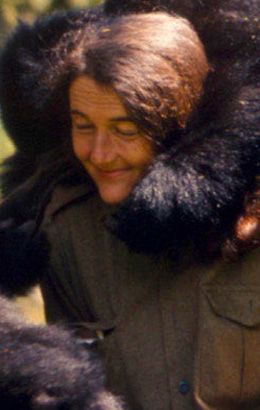
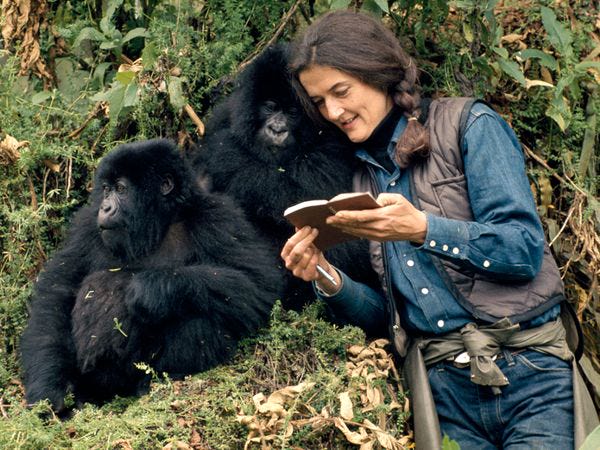
Dr Dian Fossey first arrived in the Virunga Mountains in 1967, establishing a small research camp high in the mist-covered forests of Rwanda. What began as scientific research quickly became something far deeper. Living alongside mountain gorillas for nearly two decades, she developed an unparalleled understanding of their social lives, behaviours and individual personalities.
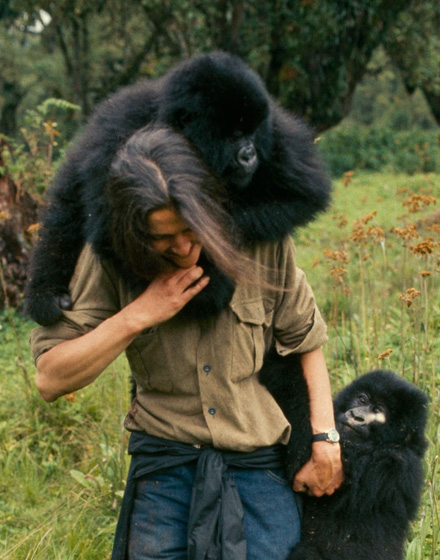
During this time, Dr Dian Fossey became acutely aware of the dangers facing the gorillas. Poaching, illegal cattle grazing and habitat destruction were pushing the species towards extinction. Refusing to remain a passive observer, she took decisive action, helping to establish some of the first dedicated anti-poaching patrols in the region and working tirelessly to protect the gorillas she had come to know so closely.
A pivotal moment came in 1978 with the killing of Digit, a silverback gorilla Dr Dian Fossey had followed and named. His death was a profound personal loss and a turning point in her conservation work. In response, she established the Digit Fund, created to support ranger patrols and provide direct, on-the-ground protection for gorillas at a critical time for the species.
Dr Dian Fossey’s commitment to protecting gorillas was unwavering and, at times, controversial. Her uncompromising stance brought conflict and opposition, but it also helped draw international attention to the urgent need for gorilla conservation. At a moment when mountain gorillas faced the very real possibility of extinction, her work played a vital role in changing the course of their survival.
Her message reached far beyond the forests of Central Africa. The publication of Gorillas in the Mist in 1983 introduced a global audience to the world of mountain gorillas and the threats they faced. The film adaptation, released in 1988 and based on her autobiography, further amplified her story and helped bring gorilla conservation into the public consciousness worldwide.
On 26 December 1985, Dr Dian Fossey was tragically killed in her cabin at the Karisoke Research Centre, where she had lived and worked for so many years. Her death was a devastating loss, but it did not bring an end to her mission.
Founded in 1989 to continue the pioneering work of Dr Dian Fossey, The Gorilla Organization was established to support the anti-poaching patrols she helped create. Building on Dr Dian Fossey’s legacy, the organisation examined why gorilla poaching was so prevalent in national parks and used these findings to develop an innovative, community-led approach to conservation. Since taking on its current name in 2002, The Gorilla Organization has expanded the scope of its field projects, working to ensure the survival of the world’s remaining wild gorilla populations.
Today, Dr Dian Fossey’s legacy lives on in the forests she fought to protect, in the survival of mountain gorillas, and in the generations of conservationists inspired by her work. As we mark the 40th anniversary of her death, her life remains a powerful reminder of the impact determined action can have, and of the responsibility to continue protecting gorillas for the future.
Below is a timeline highlighting key moments from the life and work of Dr Dian Fossey, whose research and conservation efforts continue to influence how gorillas are protected today.
1963 - Dian Fossey first encountered mountain gorillas in Africa. The sighting made her resolve to return to Africa to study the gorillas in more depth one day.
1966 – Fossey went to observe mountain gorillas in the Democratic Republic of Congo.
1967 – Dian set up the Karisoke Research Centre in the Volcanoes National Park, Rwanda.
1970 – Fossey appeared on the cover of National Geographic Magazine, significantly raising public awareness of her work and the plight of mountain gorillas.
1974 – Fossey earned her Ph.D. in zoology from the University of Cambridge after completing her dissertation, The Behaviour of the Mountain Gorilla.
1976 – Ian Redmond OBE – Chairman of the Board for The Gorilla Organization – became a research assistant to Dian Fossey at the Karisoke Research Centre until the early 80s.
1978 – Fossey established The Digit Fund—later called the Dian Fossey Gorilla Fund—named after her beloved silverback, to finance anti-poaching patrols and active conservation.
In the same year, the first commercial gorilla treks began in Volcanoes National Park—$20 permits helped reinvest in habitat protection.
1979 – ‘Life on Earth’ featuring mountain gorillas with Sir David Attenborough, screened on British television. The interaction, made possible by Fossey’s work, was a catalyst for changing public perception of gorillas from monstrous creatures to gentle, intelligent beings.
1985 – Dian Fossey was murdered in her cabin at the Karisoke Research Centre.
1990s – Mountain gorilla numbers dipped as low as ~250, triggering urgent conservation action.
1993 – Uganda opened Bwindi Impenetrable National Park to tourism, combining permits to see the Mubare family group with conservation funding.
1996 – Ian Redmond founded Ape Alliance to encourage conservation organisations to work together.
2002 – The Dian Fossey Gorilla Fund in the UK changed its name to The Gorilla Organization.
2018 – Mountain gorillas were reclassified from Critically Endangered to Endangered, marking them as the first great ape species ever to show a recovery trend.
Today – Over 1,060 mountain gorillas live across Rwanda, Uganda, and the DRC. Tourism now generates hundreds of millions of pounds annually, funding schools, healthcare, anti-poaching efforts, and local development.
Make a difference – help today!
More News
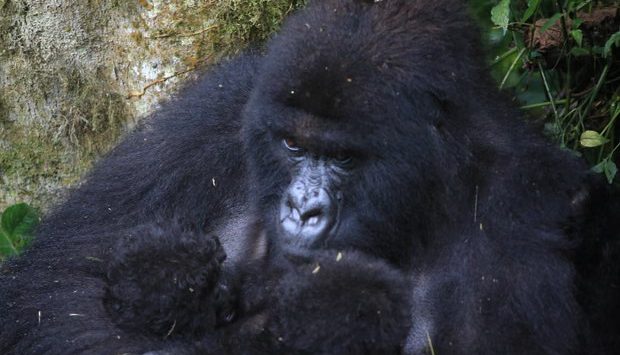
Rare mountain gorilla twins born in Virunga National Park alongside new birth in Uganda
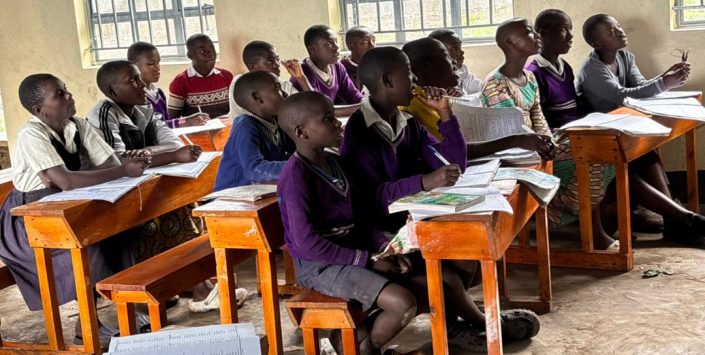
A new chapter for Nyagakenke Village Primary School
In February, we celebrated the launch of the new Nyagakenke Village Primary School, built in partnership with That Gorilla Brand.…
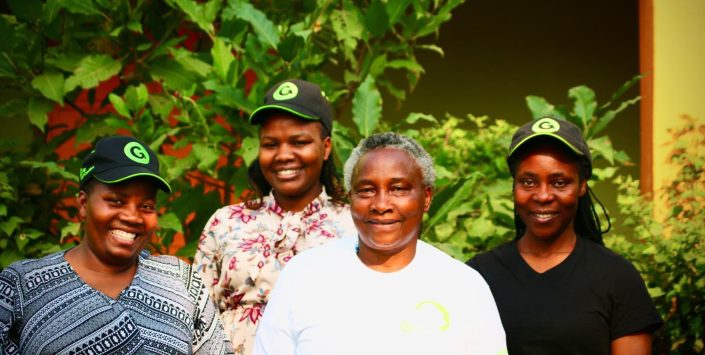
Celebrating the Women Transforming Communities this International Women’s Day
On 8th March, International Women’s Day, we celebrate the extraordinary women who are helping transform communities across Central Africa and…